 Menu
Menu

The Future of Web Development: Trends, Tools, and Best Practices
Web development has come a long way—from static HTML pages in the 90s to today’s AI-driven, interactive, and immersive applications. If you’re stepping into the world of web development or already working in it, staying updated with the latest trends is crucial.




Mobile App Development
Mobile Apps That Scale: Native vs Cross-Platform Explained
Recent blog posts

Sunday, 5 Sep 2025
UX review presentations

How do you create compelling presentations that wow your colleagues?
Monday, 6 Sep 2025
Improving UI for engagement
Learn how to make your designs more engaging and user-friendly.
Tuesday, 7 Sep 2025
Design systems in modern apps
Discover how design systems bring consistency and speed up development.
Mobile Apps That Scale: Native vs Cross-Platform Explained

October 1, 2025
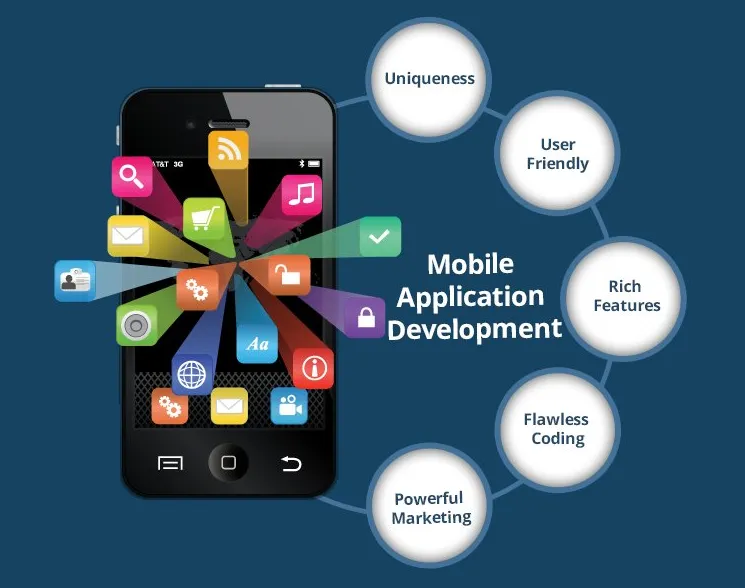
A mobile app is often the first touchpoint between your brand and its audience, shaping how users perceive and interact with your business. The decision between native and cross-platform development can significantly influence your app’s performance, cost, and long-term scalability. Understanding both approaches helps businesses make informed decisions that balance user experience, development efficiency, and future growth potential.
Mobile App Development Overview
Mobile app development is at the heart of digital engagement, offering businesses a direct channel to reach their customers anytime, anywhere. Whether it’s for e-commerce, productivity, or entertainment, apps enhance brand accessibility and build stronger customer relationships.
In today’s fast-moving market, the success of an app depends not only on its functionality but also on how seamlessly it performs across devices and platforms.
“The best platform is the one that serves your users best.”
Native App Development
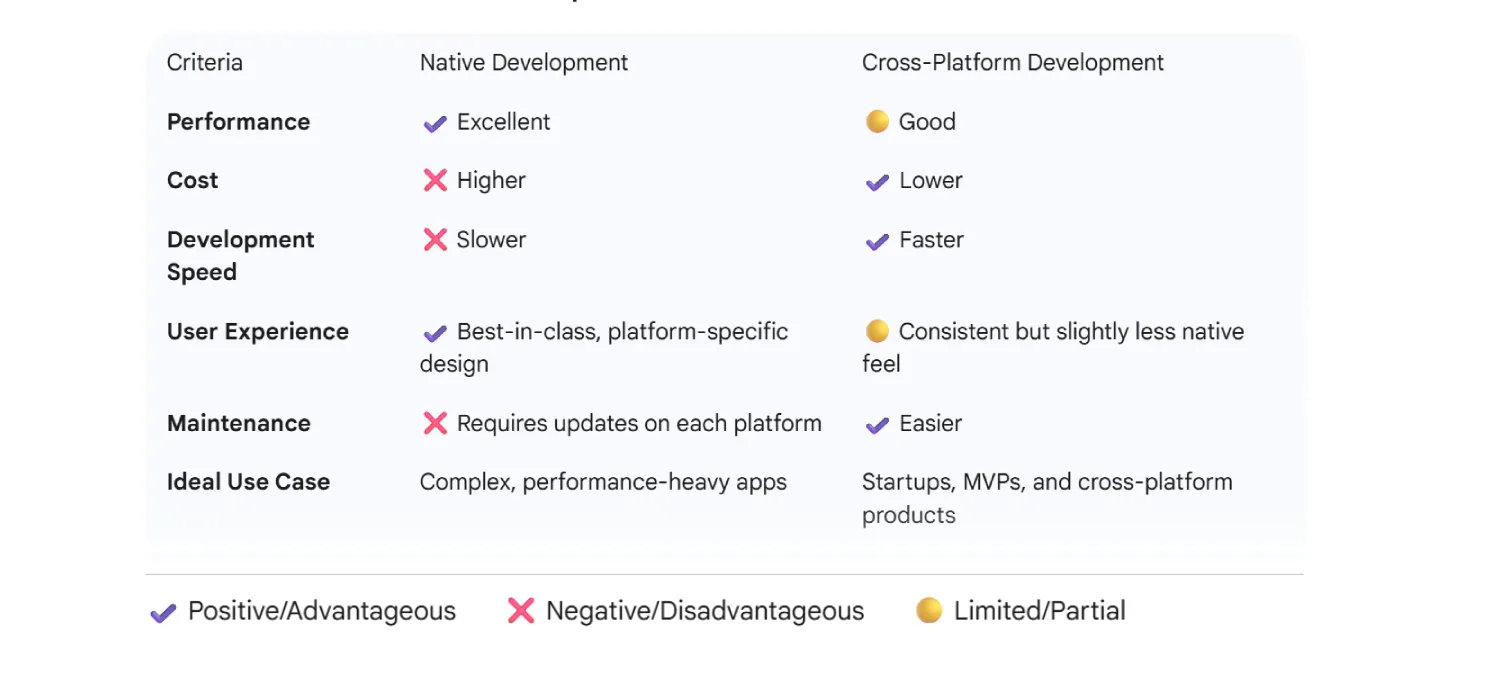
Native apps are built specifically for individual platforms; iOS using Swift or Objective-C, and Android using Kotlin or Java. This allows developers to fully leverage each platform’s tools and features, resulting in superior performance, responsiveness, and stability. While native development can be more time-consuming and costly since separate codebases are needed, it’s the ideal choice for businesses prioritizing high performance, advanced graphics, or deep hardware integration.
Cross-Platform Development
Cross-platform development enables a single codebase to run on multiple platforms, thanks to frameworks like Flutter and React Native. This approach dramatically reduces development time and cost while maintaining a consistent user experience across devices.
Although cross-platform apps may slightly lag behind native ones in performance or device-specific functionality, modern frameworks have narrowed this gap significantly, making them perfect for startups or businesses seeking faster time-to-market.
Comparison Table: Native vs Cross-Platform Development
When to Choose Which Technology
Native development is best suited for complex, performance-heavy applications such as gaming, AR/VR, or apps requiring extensive device integration. It’s also the right choice for brands aiming to deliver the highest possible user experience. On the other hand, cross-platform development is ideal for startups, MVPs, or businesses testing new ideas quickly. It offers flexibility, reduced costs, and the ability to launch across platforms simultaneously; an essential advantage in fast-paced industries.
Our Mobile Expertise
Our mobile app development process covers everything from ideation and design to deployment and maintenance. We work closely with clients to understand their business goals and recommend the most suitable development approach, whether native or cross-platform.
Our team’s expertise in frameworks like Swift, Kotlin, Flutter, and React Native ensures that each app we build is robust, scalable, and aligned with modern user expectations. We don’t just develop apps; we create digital experiences that drive engagement and growth.
Conclusion
Choosing between native and cross-platform development depends on your business goals, technical requirements, and long-term vision. Both approaches have their strengths, and when used strategically, each can deliver powerful, scalable results. With the right technology partner, businesses can build mobile solutions that not only perform flawlessly but also evolve with their audience and market demands.