 Menu
Menu
The Future of Web Development: Trends, Tools, and Best Practices
Web development has come a long way—from static HTML pages in the 90s to today’s AI-driven, interactive, and immersive applications. If you’re stepping into the world of web development or already working in it, staying updated with the latest trends is crucial.




Content
UI/UX & Product Design: How Great Design Drives Business Success
Recent blog posts

Sunday, 5 Sep 2025
UX review presentations

How do you create compelling presentations that wow your colleagues?
Monday, 6 Sep 2025
Improving UI for engagement
Learn how to make your designs more engaging and user-friendly.
Tuesday, 7 Sep 2025
Design systems in modern apps
Discover how design systems bring consistency and speed up development.
UI/UX & Product Design: How Great Design Drives Business Success

September 25, 2025
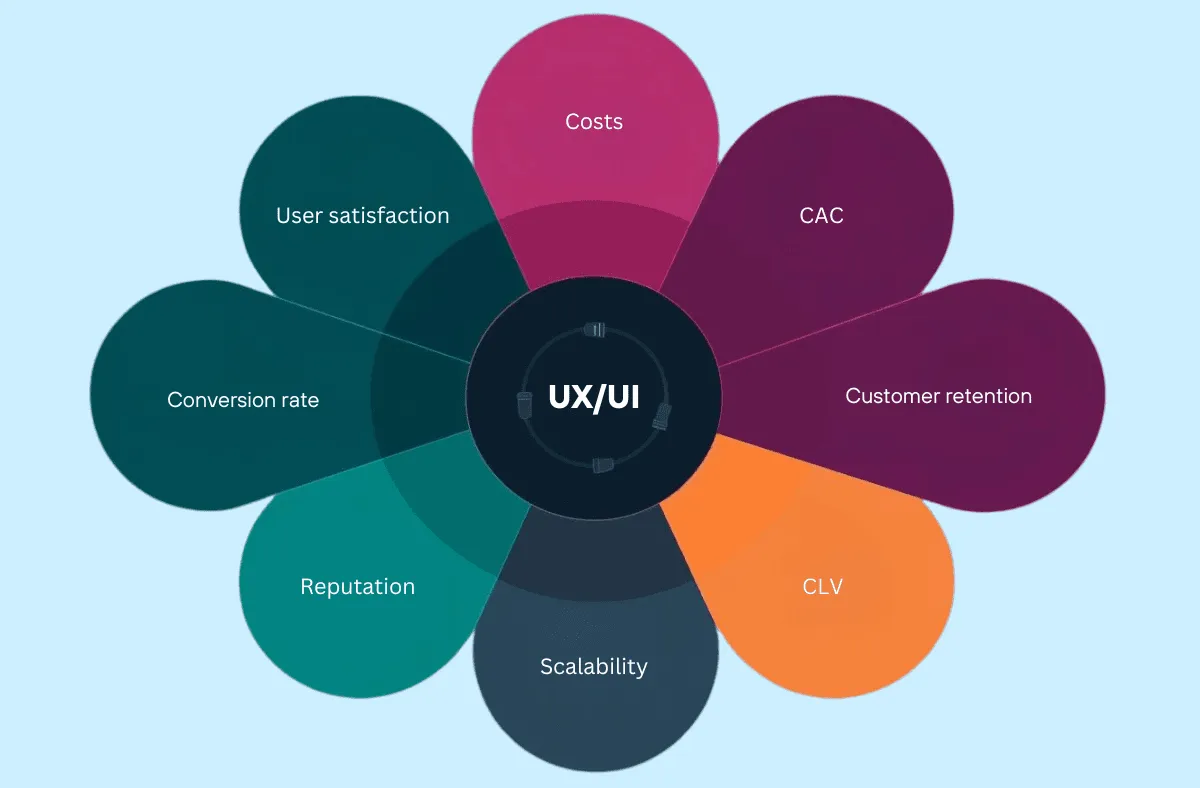
When a person interacts with a product, their first impression isn’t formed by the code or the backend system, but by the design. A product’s user interface (UI) and user experience (UX) define how users feel, navigate, and ultimately connect with it. Good design is not just about making things look beautiful; it’s about making them work beautifully.
UI/UX design is where creativity meets strategy. It’s the art of shaping ideas into digital experiences that feel natural, simple, and enjoyable. From understanding user needs to designing interfaces that guide them intuitively, strong product design builds trust and drives engagement. In today’s competitive digital world, thoughtful design isn’t an optional extra—it’s the key to standing out and keeping users coming back.
Why UI/UX Design is Crucial for Your Business
Every click, scroll, and interaction tells a story. Effective UI/UX design ensures that this story is effortless and satisfying for the user. A well-designed product helps users achieve their goals quickly, without confusion or frustration. This, in turn, has a direct impact on your business by:
- Enhancing User Satisfaction: A seamless experience leaves users feeling positive about your product and brand.
- Building Brand Credibility and Trust: When a product is easy to use, it feels professional and trustworthy.
- Increasing User Engagement and Loyalty: Great design keeps users engaged, turning one-time visitors into repeat customers and brand advocates.
On the other hand, poor design can make even the most powerful product feel complicated or unreliable. With endless alternatives available, a single frustrating experience is enough to push a user away for good.
“Design is not just what it looks like and feels like. Design is how it works. – Steve Jobs”
What's the Difference Between UI and UX?
While often used together, UI and UX are distinct disciplines that work hand-in-hand to create a cohesive experience.
UI (User Interface) Design
This focuses on the visual and interactive elements of a product. It's everything the user sees and touches—the colors, typography, buttons, layout, and animations. The goal of UI design is to create an aesthetically pleasing and visually consistent interface.
UX (User Experience) Design
This goes deeper, encompassing the user's entire journey with the product. It's about flow, clarity, and overall feeling. UX design ensures the product is logical, easy to navigate, and solves a real user problem efficiently.
A stunning interface (UI) without good usability (UX) is like a beautiful car that’s impossible to drive. Conversely, a highly functional product with a poor interface won't attract or retain users. True success is achieved when UI and UX are perfectly aligned.
UI/UX & Product Design Process
Designing a successful product is a structured, iterative process centered around the user. While specifics vary, the core journey typically follows these five steps:
- 1. Research and Discovery – The process begins with deep research to understand the target audience, their needs, pain points, and behaviors. This phase involves user interviews, surveys, competitor analysis, and creating user personas. These insights form the foundation for every design decision.
- 2. Wireframing and Prototyping – Based on the research, designers create wireframes with simple, low-fidelity layouts that outline the product's structure and user flow. Once the basic framework is established, they develop interactive prototypes that simulate how the final product will look and behave, allowing for early-stage testing.
- 3. High-Fidelity Design – Here, the wireframes are transformed into visually polished designs. Designers apply color palettes, typography, iconography, and real content to create the final look and feel of the product. A consistent design system is often created to ensure uniformity across all screens.
- 4. User Testing and Feedback – Prototypes are put in front of actual users to observe how they interact with the design. This user testing phase is crucial for identifying usability issues, confusing navigation, or areas for improvement.
- 5. Iteration and Refinement – Design is rarely a one-and-done process. Based on user feedback and testing insights, designers iterate on their work, refining the UI and UX until it meets both user expectations and business goals.
How Great Design Directly Impacts Business Success
Investing in UI/UX design isn't just an expense; it's a core business strategy that delivers a significant return on investment (ROI). Here’s how:
- Higher Conversion Rates: A simple, intuitive design makes it easier for users to sign up, make a purchase, or complete a desired action.
- Improved Customer Retention: When users enjoy interacting with a product, they are more likely to stick around, reducing churn and increasing lifetime value.
- Stronger Brand Reputation: A polished and user-friendly product reflects a commitment to quality, building a positive brand image and encouraging word-of-mouth recommendations.
- Reduced Support Costs: An intuitive product requires less user guidance, leading to fewer support requests and lower operational costs.
Key Takeaways
- Design is Functional: Great design isn't just about aesthetics; it’s about creating an experience that is both beautiful and highly functional.
- UI and UX are a Partnership: UI is the look, UX is the feel. Both are essential for creating a product that users love.
- The Process is User-Centered: Every successful design starts with understanding the user's needs and validating ideas through testing.
- Design is a Business Driver: Investing in quality UI/UX design leads to higher engagement, stronger customer loyalty, and measurable business growth.
Conclusion: Design is the Bridge
In an era of high expectations and short attention spans, design is the essential bridge between people and technology. Strong UI/UX and product design transform complex systems into rewarding, human-centered experiences. It's the thoughtful process that ensures every click adds value and every interaction builds trust.
When you prioritize design, you don't just create a product; you create a meaningful relationship with your users.