 Menu
Menu

The Future of Web Development: Trends, Tools, and Best Practices
Web development has come a long way—from static HTML pages in the 90s to today’s AI-driven, interactive, and immersive applications. If you’re stepping into the world of web development or already working in it, staying updated with the latest trends is crucial.




Content
Future-Proof Your Product: The Power of MVP Planning & Roadmapping
Recent blog posts

Sunday, 5 Sep 2025
UX review presentations

How do you create compelling presentations that wow your colleagues?
Monday, 6 Sep 2025
Improving UI for engagement
Learn how to make your designs more engaging and user-friendly.
Tuesday, 7 Sep 2025
Design systems in modern apps
Discover how design systems bring consistency and speed up development.
Future-Proof Your Product: The Power of MVP Planning & Roadmapping

September 18, 2025
Every great product begins not just with an idea, but with a clear, realistic plan. In today's competitive market, you can't afford to spend years building a solution that might miss the mark with users. This is where Minimum Viable Product (MVP) planning and product roadmapping become your most powerful tools.
These agile practices help you test ideas early, gather critical feedback, and stay focused on what matters most. Together, they create a smarter, faster, and more adaptable development process designed for long-term success.
What is an MVP and Why Does It Matter?
An MVP isn't an unfinished product; it's a strategic learning tool. The goal is to build a basic version that delivers core value to a specific set of early users. This allows you to validate your core business idea before investing significant time and money.
- Reduce Uncertainty: Test your assumptions with real-world user interaction.
- Gather Actionable Feedback: See how customers respond and identify what improvements are needed most.
- Accelerate Time-to-Market: Get a functional product into users' hands quickly.
- Guide Future Decisions: Use real data, not guesswork, to inform your product strategy.
By focusing on the essentials, you can confirm you're solving a real problem and make smarter choices for every subsequent version.
The Core Components of an MVP Plan
A solid MVP plan brings structure and confidence to your development process. It's not just about building less; it's about building the right things first.
Strategic Feature Prioritization
This is the most critical step. You must identify which features are absolutely essential to solve the user's primary problem and which can wait. This ensures your first release is lean, focused, and free of unnecessary complexity that could delay launch.
Clear Milestones and Timelines
Once core features are defined, a plan outlines short-term goals, key milestones, and measurable outcomes. This isn't a rigid deadline but a flexible guide to keep the team aligned and moving forward.
Realistic Budgeting
By limiting the initial scope, you can create a more accurate and controlled budget. This financial discipline prevents overspending on unvalidated ideas and preserves resources for future iterations based on user feedback.
Proactive Risk Analysis
What could go wrong? An MVP plan identifies potential technical hurdles, market risks, or user adoption challenges. This allows the team to prepare contingency plans in advance, making the project more resilient.
From Launch to Longevity: The Role of Product Roadmapping
If an MVP is your starting point, the product roadmap is your guide to the future. A roadmap is much more than a timeline of features; it's a shared strategic vision of how the product will evolve.
- Aligns Everyone: It keeps development teams, stakeholders, and investors on the same page about priorities and progress.
- Fosters Adaptability: It allows you to pivot quickly when user feedback or market trends change. Instead of guessing what to build next, decisions are data-driven.
- Improves Transparency: Everyone can see where the product is heading and understand the 'why' behind each major decision.
“A clear roadmap today prevents chaos tomorrow.”
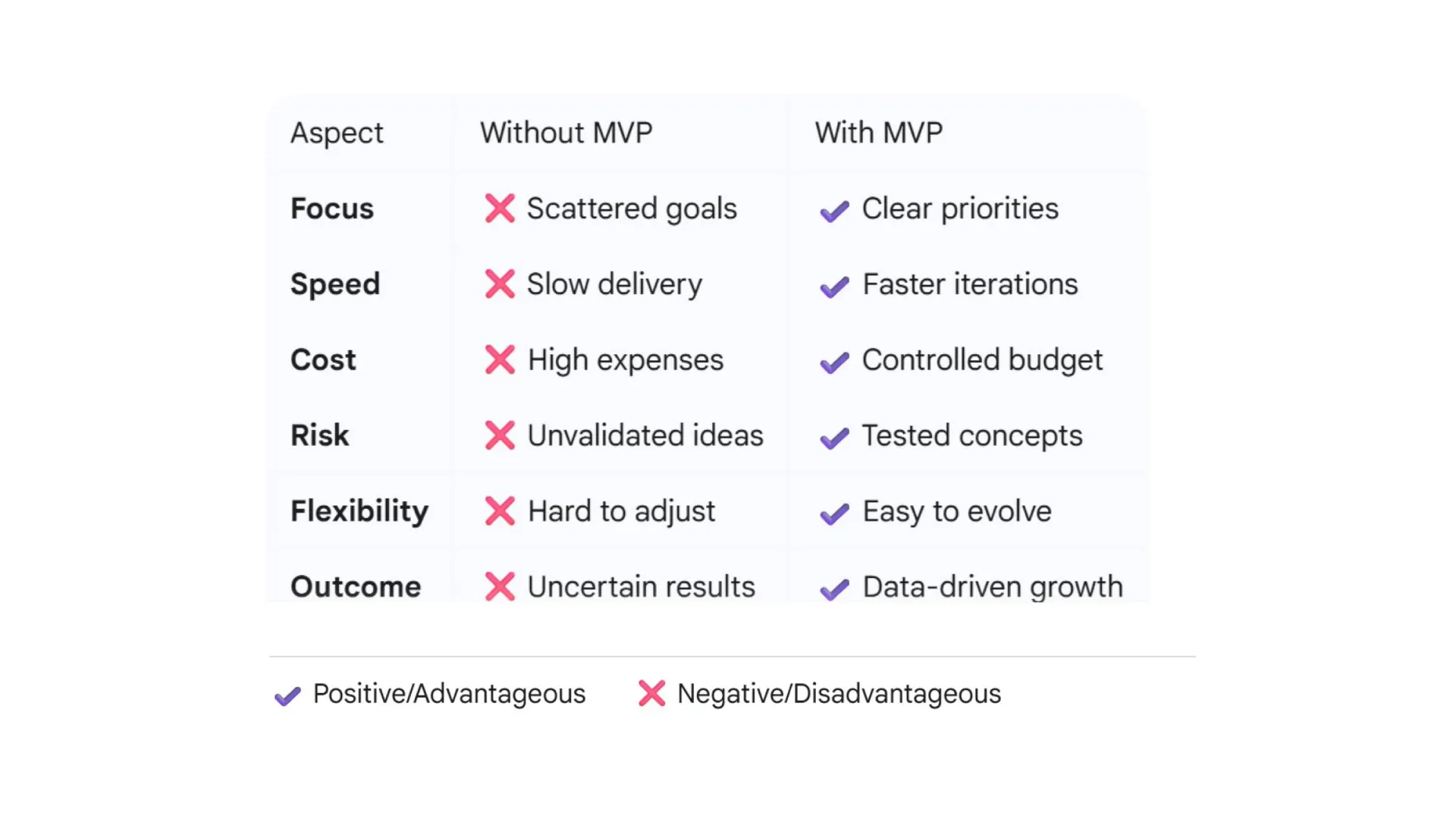
The Difference: Before and After Strategic Planning
The impact of MVP planning and roadmapping is transformative.
Table: Benefits of MVP Planning & Roadmapping
Conclusion: Build Smarter, Not Just Faster
MVP planning and product roadmapping work together to turn uncertainty into tangible progress. They provide the clarity and purpose needed to move from a great idea to a successful, market-ready product.
By starting small, testing early, and learning continuously, you create products that evolve naturally with your users. This isn't about building fast for the sake of speed; it's about building smart for lasting success. A focused MVP ensures your product stays connected to real customer needs, while a clear roadmap keeps everyone moving confidently toward the future.